Product Education
Read cinnamon by its layers.
A visual guide to Cinnamomum verum — the cinnamon historically known as Ceylon Cinnamon.
Side by Side
The distinction is structural, botanical, and sensory.
| Attribute | Ceylon Cinnamon | Cassia |
|---|---|---|
| Species | Cinnamomum verum | Other Cinnamomum species |
| Traditional origin | Sri Lanka | Various regions of Asia |
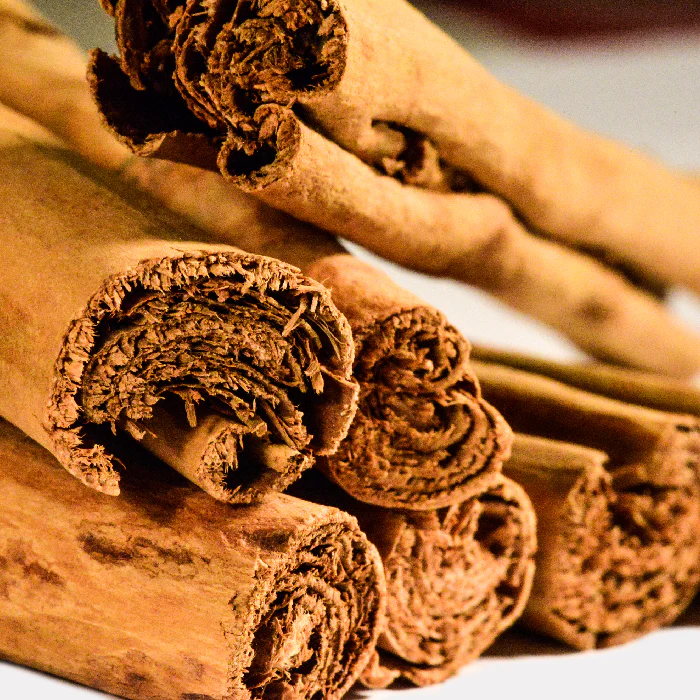
| Quill | Fine, nested layers | Typically one thicker curl |
| Flavor | Delicate, complex, subtly sweet | Generally stronger and more pungent |
| Coumarin | Generally much lower | Generally higher |
Identification
Four signs of Ceylon Cinnamon.
Layered
Several fine sheets of inner bark form a tight, nested cross-section.
Fragile
The thin bark is brittle, easy to snap, and readily ground.
Golden
Its color tends toward a pale, warm tan rather than deep reddish-brown.
Delicate
The aroma is soft and floral, with sweetness rather than a hot finish.

Sri Lankan Craft
Fine bark, rolled by hand.
Harvesters prepare the inner bark and roll it into quills. The finished structure depends on skill at every step.
Composition
Coumarin is one factual difference.
Cassia varieties generally contain substantially more coumarin than Ceylon Cinnamon, which is typically reported at much lower levels.
This is a compositional distinction only. True Spice Imports makes no health or medical claims about either type.
In the Kitchen
A subtler profile to work with.
Ceylon Cinnamon brings a gentler, more aromatic profile to pastry, custards, beverages, fruit preparations, and spice blends. The right choice depends on the flavor a recipe calls for.
Explore Our Products